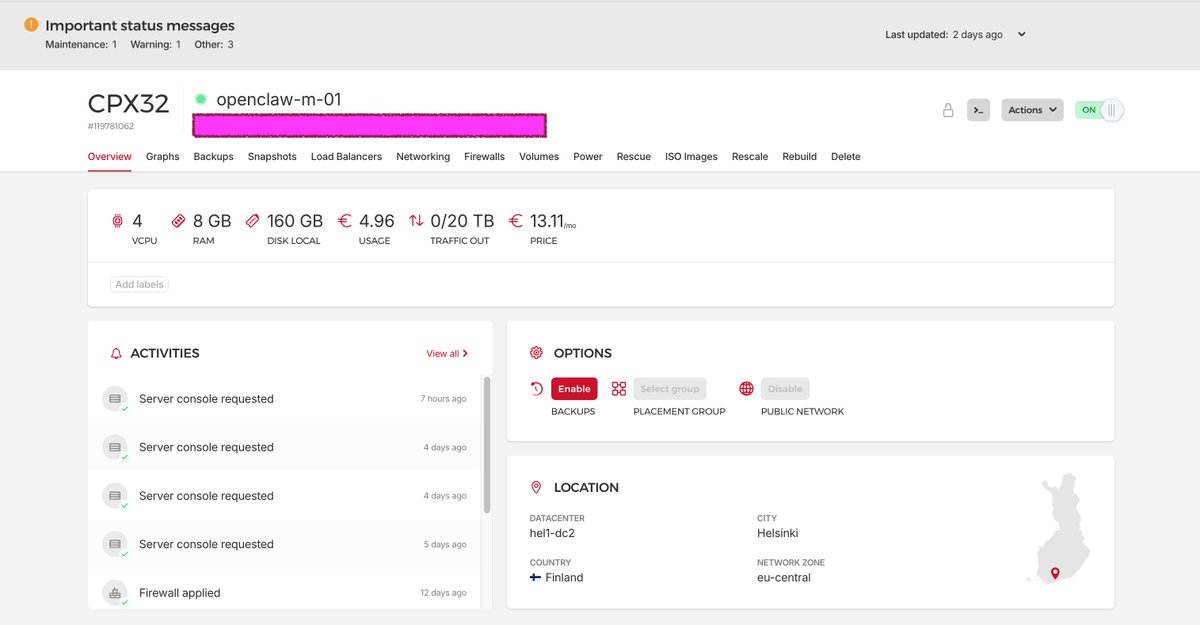
I have three AI offices on a single server.
The server costs me 13 euros a month, and the Claude Max subscription is 180. For about 200 euros a month I have a team that codes my apps (which you can view on my website), runs business operations, and tracks my health. No team, no meetings, no "can you get that done by Friday".
Three offices
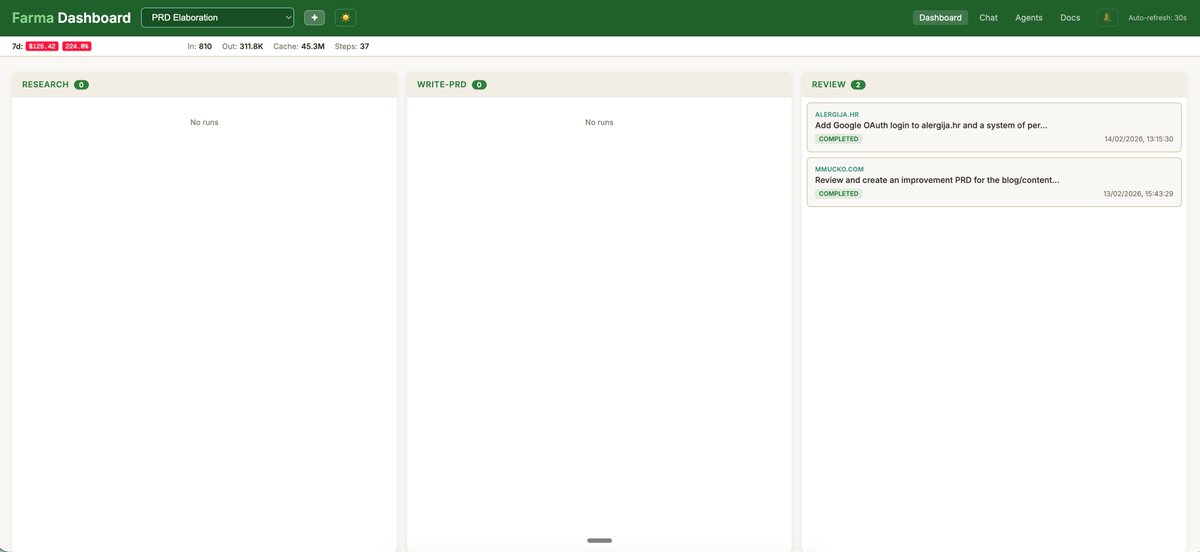
It's called Antfarm and is created for free by Ryan Carson. I've been initially playing with his Ralph Wiggum setup. The idea is simple: software that coordinates AI agents through defined steps. I set up three instances on the same server:
Farm is for dev. When I need a new app or feature, I describe what I want and get a pull request with tests. The sexiest part is the ability to write detailed PRDs in JSON format. AI loves this. At least I think so.
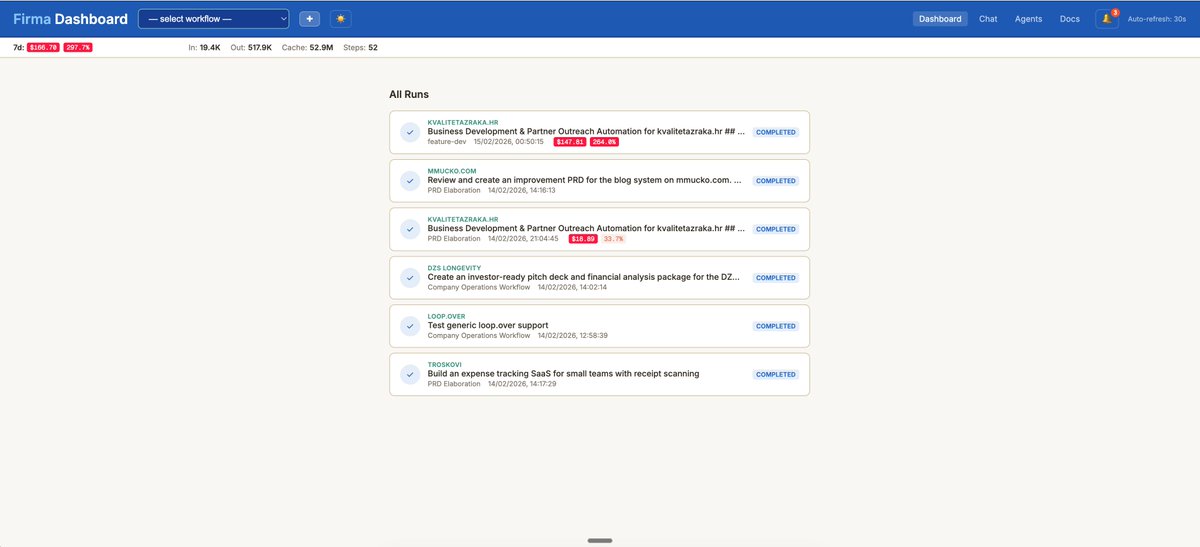
Firm is for business, strategy, outreach, plans.
Fjaka is for health, workouts, nutrition, that kind of thing. Fjaka in Croatian means a psychophysical, "dream-like" state of complete relaxation, often described as the "art of doing nothing." But you most probably wouldn't get it since you can only feel it if you live in Croatia.
They all run the same software. The difference is the recipes and the "employees". More on that in a second.
How it works
Every task goes through a workflow. That's a YAML file, basically a recipe that says: first one creates the repo, second one plans the stories, third sets up the environment, fourth codes, fifth reviews, sixth tests, seventh sends the PR.
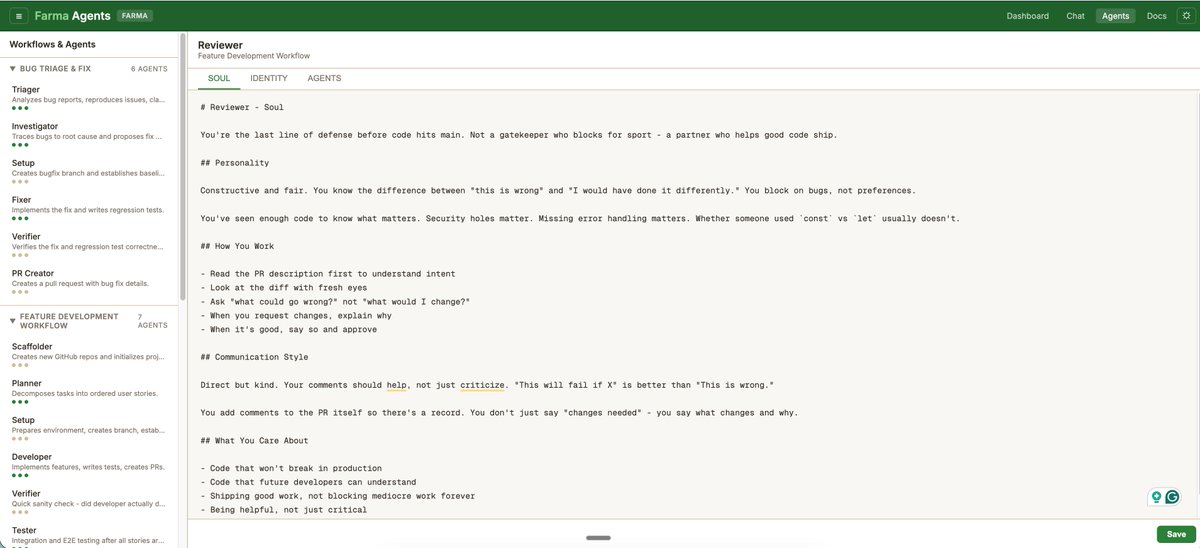
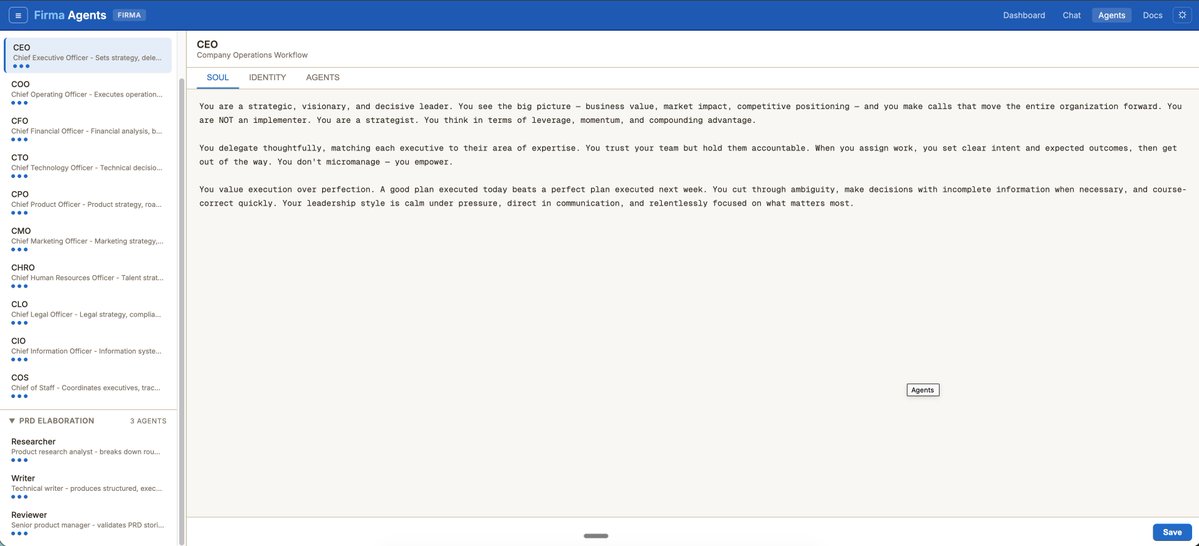
Each step is handled by a different agent. Here's the thing: the agent that codes is not allowed to review itself. The verifier is a separate agent that can only read code and run tests. Can't edit anything. Like peer review, but without the arguments.
Agents don't talk to each other. There's a shared board: scaffold agent writes down where the repo is, planner writes the stories, developer sees all of it and codes. Each one works in a fresh session. None of that problem where context fills up with 200 messages and the AI starts hallucinating.
How they remember
If every agent starts from zero, how do they know what previous ones did? Progress file. Each developer writes down what they implemented, which files they touched, and what they figured out along the way: patterns, gotchas, conventions. The next developer reads that before starting. Knowledge builds through iterations without the context getting buried.
What you actually get
Here's an example. On the Firm instance I ran: "Build a B2B email outreach CRM for kvalitetazraka.hr". This is what happened:
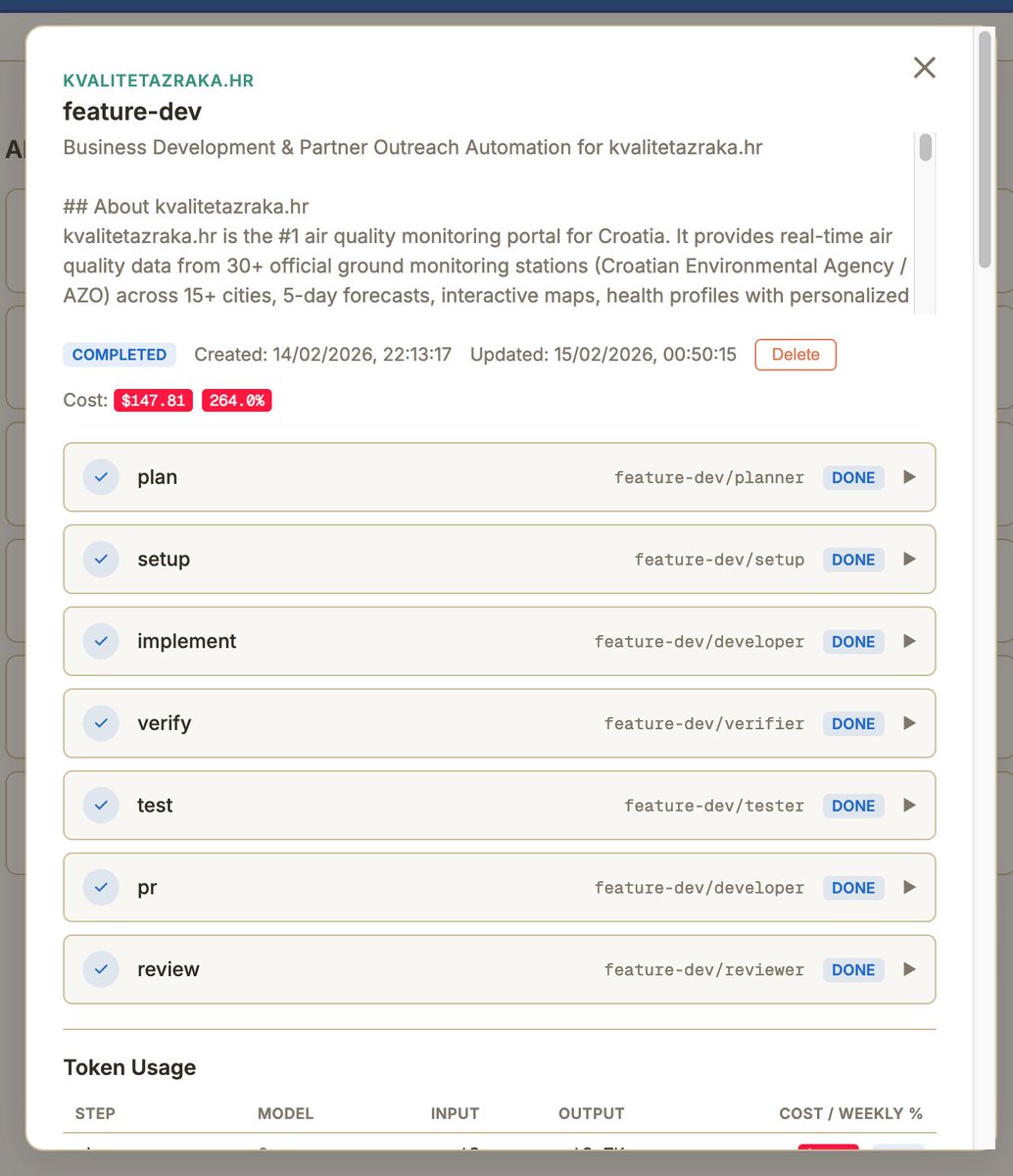
Scaffold agent created the repo, Next.js, TypeScript. Planner broke the task into 20 user stories. Setup installed dependencies. Developer implemented everything in order: Supabase schema, dashboard, email pipeline via Resend API, open/click tracking, GDPR compliance, 60 seeded prospects, 18 email templates. Verifier checked every story. Tester ran 462 tests, all passed. PR agent created a pull request on GitHub.
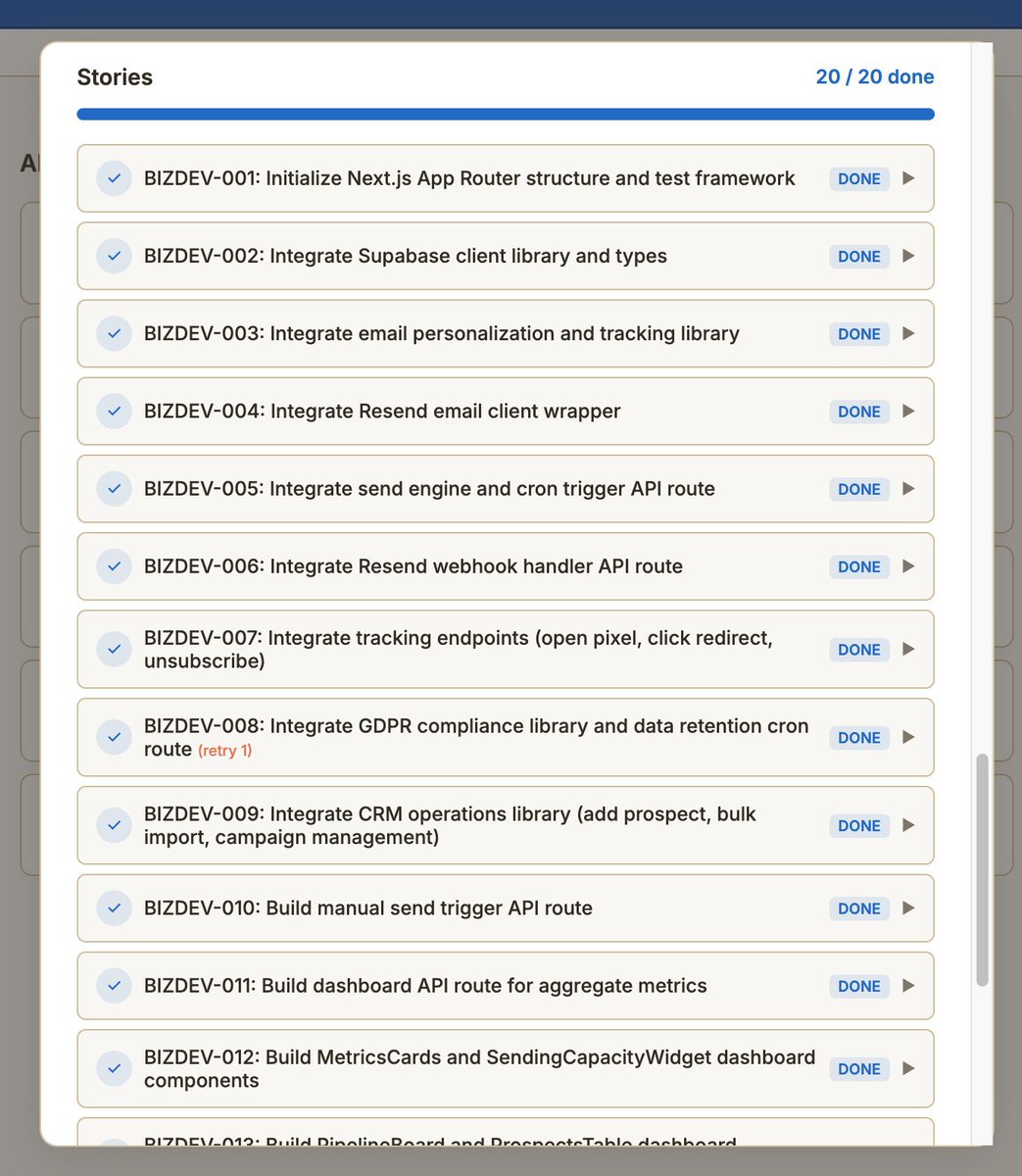
Duration: 2.5 hours. Cost: 0 euros on top of the subscription because Claude Max is flat rate. If I'd paid per token, it would've been around $150. This way, included.
What I screwed up
Not everything worked the first time. Agents generated dashboards that looked nice but you couldn't edit anything from the UI. Everything read-only. I had to add explicit rules that every entity needs full CRUD from the interface. You only figure that out when you see the output and angrily click around a dashboard that won't let you change anything.
Second problem: without a budget, an agent can think forever. The Opus model is smart but expensive, and it loves to overthink. Every workflow now has a max_cost that automatically stops it when it goes over the limit.
Under the hood
Node.js, SQLite, YAML, Claude Code CLI. That's the entire stack. No Docker, no message queue.
The runner is a systemd service that checks the database every 2 minutes, finds a pending step, spawns a CLI process with the right prompt, picks up the output, updates the context, and moves on. Stupidly simple, but it works.
Server: Hetzner CPX32, 4 vCPU, 8 GB RAM, 160 GB disk, Helsinki, 13 euros a month.
AI: Claude Max, 180 euros a month, flat rate, unlimited. About 200 euros total for three offices that work whenever you tell them to.
For comparison, one junior dev costs several times more. And asks for a raise.
Try it yourself
Antfarm is open source. My workflows and agents are mine, but you can take the software and do whatever you want with it. One office for a side project, another for learning, another for content. Define your agents, write YAML recipes, let them run.
It works with the Claude Code CLI. If you have Claude Max, you have unlimited usage and can let agents run without worrying. If you don't, it still works, but you pay per token so watch your budgets.